
|

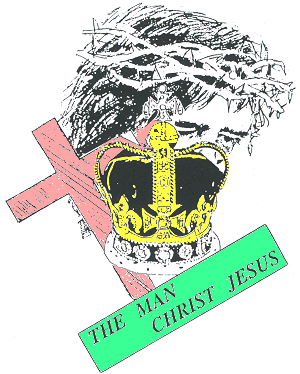 |
IN HIS FOOTSTEPS 12
'...my Lord and my God
|
A HARMONISING OF THE GOSPELS
IN ONE CONTINUAL NARRATIVE
First published in March 1993 as 12 individual A5 booklets
These are still available in the original form upon request.
FOREWORD:
Although each one of this series of studies, which we have entitled `In His Footsteps', are
complete studies in themselves, space alone has restricted much of the detail we would have
liked to include. However this has been covered in more depth in other studies, and we list
below those we feel would be of help to you before you complete the reading of this series.
They are:
They Reap the Whirlwind
The Covenants of God
The Feast of Passover
The Feast of Unleavened Bread
The Feast of First Fruits
The Feast of Trumpets
The Day of Atonement
The Feast of Tabernacles
And Then The End Shall Come
(a series of 5 booklets based on Matthew 24) |
~ ~ ~ ~ ~ ~
In these twelve studies of walking in the footsteps of the Man Christ Jesus we have sought
to present the Gospels in an historical, chronological setting so as to reveal the contextual
message contained within them. Only when seen in this way can the Church fully understand
the tragedy of appropriating to its exclusive self certain portions of Scripture and therefore
distorting the truth contained within them. Although the Gospels are to be found in the
beginning of the section of the Bible commonly referred to as the New Testament - or to
give it a more Scriptural title, the New Covenant - they are but a part of the whole Canon
of Scripture and, as such, should be used in that context. The New Covenant is found first
in the Old Covenant, and the Gospels are but the `filling out', the fulfillment, of that New
Covenant promised by God to His chosen people, the nation of Israel. It was the rejection
of the Messiah (who was the fulfillment of the New Covenant) by that generation of the
nation of Israel that opened up the way for God's grace to reach out to the people of the
Gentile nations, `to be a light to the Gentiles and the Glory of Your people Israel'. Even
to call the Gospels the `bridge' between the Old and New Covenants is still not fully
understanding their place within the whole of Scripture, which itself is an ongoing revelation
of the purposes of God. The Gospels in the New Covenant are indeed the detail required in
order to understand the New Covenant promised by God to His ancient people, and those
who have understood the call of God and by grace through faith have accepted and believed
in Jesus as Lord and Saviour, both Jew and Gentile alike, have moved into the New
Covenant of God - revealed in the Gospels as Jesus, the Messiah of the Jews and the Christ
of the Gentiles. Their new life is rooted in Him alone, and the understanding of the
outworking of that new life is to be found in the books of Scripture that follow on from the
Gospels.
Those faithful Jews, now alive in their new life in Jesus the Messiah, who under the
anointing of the Holy Spirit wrote the final books of Scripture, could now write with heartfelt
gratefulness for that New Covenant: (1 John 1:3-4)
" We proclaim to you what we have seen and heard, so that you also may have fellowship
with us. And our fellowship is with the Father and with His Son, Jesus Christ. We write this
to make your joy complete. "
In this last of the series of studies on walking in the footsteps of the Man Christ Jesus, we
enter the long dark tunnel that would finally open up into the glorious light of the
Resurrection. For those who even now seek understanding of that Glorious Light there has
to come that personal revelation as to whom this Jesus is - the One who died and so
gloriously came alive through the mighty power of God. Even among the first disciples there
had to come this full revelation of the risen Lord Jesus:
" Now Thomas (called Didymus), one of the Twelve, was not with the disciples when Jesus
came. When the other disciples told him that they had seen the Lord, he declared, `Unless
I see the nail marks in His hands and put my finger where the nails were, and put my hand
into His side, I will not believe it.' A week later His disciples were in the house again, and
Thomas was with them. Though the doors were locked, Jesus came and stood among them
and said, `Peace be with you!' Then He said to Thomas, `Put your finger here; see My
hands. reach out your hand and put it into My side. Stop doubting and believe.' Thomas
said to Him, `My Lord and My God.' Then Jesus told him:
` Because you have seen Me, you have believed;
blessed are those who have not seen, and yet have believed.' "
~ ~ ~ ~
It was now the 15th day of Nissan - Passover Day - which according to Jewish tradition
was from sundown on the 14th day of Nissan unto sunset on the 15th day of Nissan.
Incredible events were to be fulfilled in this one short day! John begins the narrative: "Now
Judas, who betrayed Him, knew the place, because Jesus had often met there with His
disciples. So Judas came to the grove, guiding a detachment of soldiers and some officials
from the chief priests and the Pharisees" (18:2-3). Judas was required as a witness for the
charge against Jesus. The charge was brought, the witness had testified, and Pilate was now
waiting to begin the civil trial. A detachment of soldiers (a cohort composed of anything
up to 600 men) with its commander, accompanied Judas and the officials from the
Sanhedrin, and, as we have seen before, it had to be done in secret away from the crowds
for the Pharisees and the Sadducees were in fear of them because of what they planned to
do. "Jesus, knowing all that was going to happen to Him, went out and asked them, `Who
is it you want?' `Jesus of Nazareth,' they replied. `I am' (the `He' is a later insertion
for the expression `I am' was a Messianic claim to Divinity) said Jesus! When Jesus said,
`I am', they drew back and fell to the ground" (18:4-6). The Divine Glory of Jesus once
more broke through His earthly physical body - and they fell to the ground!
Mark records that Judas betrayed Jesus with a kiss, and this too was in fulfillment of a
Messianic prophecy. The kiss was not needed for the betrayal had already taken place in the
accusation before Pilate and the release of a cohort of soldiers - and, more importantly,
Jesus Himself had openly revealed His identity by His words `I am'. Again they asked the
question and received the same reply: "`I told you that I am,' Jesus answered" (v8). We
read that Peter, impetuous to the end, drew his sword and was rebuked by his Master: `Put
your sword away! Shall I not drink the cup the Father has given Me?' (v 11). It is
interesting to note that the Greek word for `sword' suggests that it was a sacrificial knife-
sword used for the private Passover meal - and once again we see that these Scriptures are
full of Messianic overtones! Mark also records that a young man was seen running away
naked. There has been much speculation on the significance of these verses, but it is no
more than a modest Jewish way of introducing himself into the narrative, thus making it
more authoritative, through personal involvement, but without drawing attention to himself.
Returning to John, we now see the beginning of the trial leading to the crucifixion: "Then
the detachment of soldiers with its commander and the Jewish officials arrested Jesus. They
bound Him and brought Him first to Annas, who was the father-in-law of Caiaphas, the high
priest that year" (18:12-13). This raises an interesting point: According to the Law, a high
priest retained his office until his death, but historical records reveal that Annas was removed
from that position by the Roman Procurator who then installed Caiaphas in his place.
However, although Annas was deposed by the Romans, as father-in-law of Caiaphas he
managed to keep his family in control of the position of high priest. So we see here that in
order to conform to Jewish Law Jesus was brought first to Annas, who was still recognised
by the Jews as high priest until his death. We read that "The high priest (Annas)
questioned Jesus about His disciples and His teaching. `I have spoken openly to the world,'
Jesus replied. `I have always taught in synagogues or at the Temple, where all the Jews
come together. I said nothing in secret. Why question Me? Ask those who heard Me.
Surely they know what I said'" (18:19-21). We shall see throughout the trial the Jews
continually violating their own Law in their unbridled hatred of the Man Christ Jesus, and
here is such an incidence. Their own teaching forbade any trial to be conducted in secret,
but here we have Annas (the real high priest) earning the reproof of Jesus, `Why question
Me in violation of your own Law?' Jesus was rewarded by a nearby official striking Him
in the face - again in violation of their own Law, as shown in the reply Jesus gave: "`If
I said something wrong,' Jesus replied, `testify as to what is wrong. But if I spoke the
truth, why did you strike Me?' Then Annas sent Him, still bound, to Caiaphas, the high
priest" (18:19-24).
This raises another interesting point. Here we have the high priest (according to Jewish
Law, the official religious leader) again in violation of his own Law. Being unable to bring
a charge against Jesus, he then sent Him to the high priest who had been installed and upheld
by secular Roman law! Matthew describes the event: "Those who had arrested Jesus took
Him to Caiaphas, the high priest, where the Teachers of the Law and the elders had
assembled" (26:57). This was now the full assembly of the Sanhedrin, which according to
their Law comprised of 71 members. There had to be a minimum of 23 members present
for a trial to be conducted, where according to the Law the votes of 11 members were
required to acquit, and 13 votes were required to convict those brought to trial. Again we
see a total violation of their Law!
Mark 14:56: "Many testified falsely against Him, but their statements did not agree".
Mark 14:57-59: "Then some stood up and gave this false testimony against Him. `We
heard Him say, I will destroy this man-made Temple and in three days will build another,
not made by man'. Yet even their own testimony did not agree".
Mark 16:60: "Then the high priest stood up before them and asked Jesus, `Are You not
going to answer? What is this testimony that these men are bringing against you?' But
Jesus remained silent and gave no answer. (According to their own Mishnaic teaching the
accused person did not have to reply. The witnesses had to testify, and 13 members of the
Sanhedrin had to agree with the witnesses in order to convict!)
Jesus was not answerable to their Mishnaic teaching, and turning to Matthew's account we
see a different approach by the high priest: "The high priest said to Him, `I charge you
under oath by the living God: Tell us if You are the Messiah, the Son of God.'" (Jesus,
now constrained by a personal oath to the living God, at last replied), `Yes, it is as you say.
But I say to all of you: In the future you will see the Son of Man sitting at the right hand
of the Mighty One and coming on the clouds of heaven.' Then the high priest tore his robes
and said, `He has spoken blasphemy! Why do we need any more witnesses? Look, now
you have heard the blasphemy. What do you think?' `He is worthy of death,' they
answered. Then they spat in His face and struck Him with their fists. Others slapped Him
and said, `Prophesy to us, Messiah. Who hit You?'" (26:64-68). The conflict was still the
same. The charge of blasphemy was according to the Mishnah of the Pharisees and not
accepted as Law by the Sadducees, but because the Sadducees were now in league with the
Pharisees to rid themselves of Jesus they even went to the extreme of ignoring their own
strict teaching! As for the Pharisees: The high priest tearing his clothes was a violation of
their own Mishnaic teaching, but they also were prepared to ignore this in their concentrated
effort with the Sadducees to destroy this Messianic Movement! The cry of the high priest
that they needed no further witnesses to convict Jesus brought forth the response from the
others, `He is worthy of death'. Again the Pharisees were in violation of their Mishnaic
teaching that no convicted person could be condemned to death by his word alone!
Matthew 26:67: "Then they spat in His face and struck Him with their fists. Others
slapped Him and said, `Prophesy to us, Messiah. Who hit You?'" These actions were
considered to be the worst possible indignity a Jew could suffer and, according to their Law,
was a punishable offence. Their mocking `Prophesy to us, Messiah' was, according to
their own words, blasphemy - for they were calling Jesus `Messiah' when the fact was
that He was standing before them on a charge of blasphemy for calling Himself the Son of
God! There was throughout this terrible mockery of a trial a continual violation by
themselves of their own Law . . and by their actions they condemned themselves!
Turning now to John we read of Peter's tragic denial of his Lord and Master: "Simon Peter
and another disciple (John uses this distinct Jewish way of naming himself in humilty) were
following Jesus. Because this disciple was known to the high priest, he went with Jesus into
the high priest's courtyard, but Peter had to wait outside at the door. The other disciple
(John) who was known to the high priest, came back, spoke to the girl on duty there and
brought Peter in" (18:15-16). We now read of Peter's first denial of Jesus through the
enquiry of `the girl on duty'. The denials would become more vehement, this time around
a fire in the courtyard. Luke records: "A servant girl saw him seated there in the firelight.
She looked closely at him and said, `This man was with Him'" (22:56-57). Mark records
the third even more strong denial, still around the fire in the courtyard of the high priest:
"After a while, those standing near said to Peter, `Surely you are one of them, for you are
a Galiean.' He began to call down curses on himself, and he swore to them, ` I don't know
this man you are talking about.' Immediately the cock crowed the second time. Then Peter
remembered the words Jesus had spoken to him: `Before the cock crows twice you will
disown Me three times.' And he broke down and wept" (14:70-72).
This part of the trial was over. The high priest and the elders were still trying to legalize
what they had done and so they brought Jesus again before the Sanhedrin to formally
condemn Him. We return to Luke's narrative: "At daybreak (on the day of Passover) the
council of the elders of the people, both the chief priests and the Teachers of the Law (the
full Sanhedrin) met togther, and Jesus was led before them. `If You are the Messiah,' they
said, `tell us.' Jesus answered, `If I tell you, you will not believe Me, and if I asked you,
you would not answer. But from now on the Son of Man will be seated at the right hand of
the Mighty God.' They all asked, `Are You then the Son of God?' He replied, `You are
right in saying I AM.' Then they said, `Why do we need any more testimony? We have
heard it from His own lips'" (22:66-71). Again, by using the Jewish way of replying to a
question, `You are right in saying I AM, Jesus was firmly answering the Sanhedrin `YES'!
This, then, was the end of the religious trial of Jesus before the whole assembly of the
Sanhedrin. They had completely violated their own Law and therefore had no legal
conviction against Him - but that would not stop them! It was during this year that the
right to pass the death penalty had been withdrawn from the Sanhedrin by the Roman
authorities, which meant that now Jesus must be brought to a civil court and convicted by
them before the death penalty could be asked for by the Sanhedrin - and Roman law
demanded a witness to the `crime' Jesus was accused of!
That witness would not be present in court for Judas Iscariot had paid the penalty for his
appalling treachery by ending his own life. Matthew records: "When Judas, who had
betrayed Him, saw that Jesus was condemned, he was seized with remorse (it was remorse,
not repentance unto salvation, as occasionally it is said) and returned the thirty silver coins
to the chief priests and the elders. `I have sinned,' he said, `for I have betrayed innocent
blood.' `What is that to us?' they replied. `That is your responsibility.' So Judas threw
the money into the Temple and left. Then he went away and hanged himself. The chief
priests picked up the coins and said, `It is against the Law to put this into the treasury, since
it is blood money.' So they decided to use the money to buy the potter's field as a burial
place for foreigners. That is why it is called the Field of Blood to this day. Then what was
spoken by Jeremiah the prophet was fulfilled" (27:3-9). This money was Corban . . money
given to God . . but as we have said before, the priests just could not see the hypocrisy of
what they had done. They had used the Corban money, in direct contradiction to their own
Law, by giving the thirty silver coins to Judas as the price of betrayal (although they had
unwittingly paid for a sacrifice of GOD's chosing with the Temple money). It was a
contentious act, and according to the Law of Moses was all that a lowly slave who had been
killed was worth! Now, with the money thrown back at them by a remorseful Judas, they
self-righteously refused to put it back into the Temple treasury as it was Corban money!
They now faced a quandry. According to their Law there could be no dead bodies within
the city walls on Passover Day, (if it was another day a sacrifice could be offered to cleanse
the city) and so it was customary on such occasions to take the dead bodies to the Valley
of Hinnom (a place of burying . . Gehenna in Hebrew) so that the city was ceremonially
clean, the dead bodies being burned after their High Feast days were concluded. And so
after Judas had hanged himself, in order to comply with the religious requirements, he was
thrown into Gehenna for later burial. Acts 1:18-19 tells us that after Judas was cast into
Gehenna, "his body burst open and all his intestines spilled out. Everyone in Jerusalem
heard about this, so they called that field in their language Akeldama . . that is, Field of
Blood."
Under Jewish Law the priests could not use the money that Judas had flung back at them.
It had to be returned to the owner, and since that was impossible (because of Judas' suicide)
the next option was for them to use it for the `public good' - hence the reason for buying
the land in the Valley of Hinnom. Again, under the Law any such land had to be purchased
in the name of the owner - which is why we see in Acts 1 that `Judas bought a field'. In
doing so the priests also fulfilled the words of Jeremiah the prophet: (Jeremiah 19:6)
" So beware, the days are coming, declares the LORD, when the people will no longer call
this place Topheth or the Valley of Ben Hinnom, but the Valley of Slaughter. "
The land the priests bought was Topheth or the Valley of Hinnom, and in so doing they also
purchased the curse that was laid upon it by the words of Jeremiah, for when the armies of
Titus ransacked Jerusalem in AD 70 it was recorded that the Valley of Slaughter saw the
most terrible number of deaths among the Jews as they attempted to flee the city - so many
that there was no more room to bury the dead!
We now move on to the civil trial of Jesus before Pilate. John records the event: "Then the
Jews led Jesus from Caiaphas to the palace of the Roman governor. By now it was early
morning, and to avoid ceremonial uncleaness the Jews did not enter the palace; they wanted
to be able to eat the Passover! So Pilate came out to them and asked, `What charges are
you bringing against this man?'" (18:28-29) According to Roman law all trials had to be
held in public - they were open courts - and a specific charge must be brought by a
prosecuting witness, which was now impossible for Judas was dead. This explains much of
the dialogue with Pilate and his apparent earlier confusion. Judas originally appeared before
Pilate with his accusation, which had resulted in a cohort of soldiers being sent to arrest
Jesus, but now the prosecuting witness was dead! Because the priests were `clean' and
ready for the Passover ceremonies Pilate (ready and waiting for the accused prisoner to be
brought before him) had so come out to them, and seeing no sign of Judas with the prisoner
He asked, `What charges are you bringing against this man (in other words, where is the
prosecuting witness that Roman law demands)?' The priests, knowing what the problem
was, tried to force Pilate's hand by bluff: "`If he were not a criminal,' they replied, `we
would not have handed Him over to you.' Pilate said, `Take Him yourselves and judge Him
by your own Law'". (In other words, `I cannot judge Him by Roman law without a
prosecuting witness'.) The Jews knew the problem but they wanted this man Jesus DEAD.
In their own Mishnah it is recorded that the Jews lost the right to exercise the death penalty
fourty years before the destruction of the Temple in AD 70 - which leads us back to the
reason why the Jews brought Jesus before the Roman Procurator but were now in difficulty
because of the death of Judas. Roman law could not convict without a prosecuting witness,
and under the restrictions placed on the Jewish Law by the Roman decree the death penalty
had been abolished!
Even in this travesty of the trial of Jesus we can still see the hand of God in a Messianic
context. If the Romans had not withdrawn the right to impose the death penalty from the
Sanhedrin at this particular time, the Jews would have convicted Jesus of blasphemy in their
religious courts. The penalty for this was death by stoning, which would have meant that
the death of Jesus could not have brought atonement - He would not have been `lifted up
to draw all men unto Him'! The atoning sacrifice required blood to be shed. The righteous
requirements of the Law demanded death on a tree . . a cursed thing! Death by stoning
would not have met these requirements! Pilate, concerned with the worsening situation, tried
once again: "Pilate then went back to his palace, summoned Jesus, and asked Him, `Are
You the King of the Jews? (are You attempting to establish a kingdom as a usurper of
Caesar's authority)'. Jesus, knowing this accusation had been made by the Jews to Pilate,
answered plainly: `My Kingdom is not of this world. If it were My servants would fight
to prevent My arrest by the Jews. But now My Kingdom is from another place'" (18:36)
(By this Jesus was saying that He posed no threat to either Rome or Caesar. He was King
of another world.) The debate continued, but in the end Pilate, bound by Roman law, had
to return to the Jews: "With this he went out again to the Jews. `I find no basis for a
charge against Him'" (18:38). Luke continues the narrative: "But they insisted, `He stirs
up the people all over Judea (the area under direct Roman authority) by His teaching. He
started in Galilee and has come all the way here'" (23:5) Pilate now saw a way out of the
impossible situation. If Jesus was from Galilee, then He should be brought to trial by the
authorities of Herod Antipas. "On hearing this, Pilate asked if the man was a Galilean.
When he learned that Jesus was under Herod's jurisdiction, he sent Him to Herod, who was
in Jerusalem at that time (for the Passover)" (23:6). But it would not work out that way.
We read that after Herod Antipas had questioned Jesus he finally became bored because he
did not see any hoped-for miracles, and so he got rid of the problem. "The chief priests and
the Teachers of the Law were standing there, vehemently accusing Him. Then Herod and
his soldiers ridiculed and mocked Him. Dressing Him in an elegant robe they sent Him back
to Pilate" (23:10-11).
The net was being slowly tightened - there was no way out for Pilate! Jesus finally stood
before Him for a second time, and we read that Pilate slowly, reluctantly, and in great fear
of the Jews, gave in to the demands of the Sanhedrin by seizing upon a custom of releasing
a prisoner during the Passover Feast: "Now it was the custom at the Feast to release a
prisoner whom the people requested. A man called Barabbas was in prison with the
insurrectionists who had committed murder in the uprising. The crowd came up and asked
Pilate to do for them what he usually did" (15:6-8). We now have the most incredible
situation. In custody at this time was Jesus, the Son of the Father, falsely accused of
insurrection by a trumped-up charge of setting up a kingdom opposed to Caesar - after they
had lost their prosecuting witness, Judas. The second man, called Jesus bar Abba
(Barabbas) Jesus, the son of the father - had correctly been found guilty of insurrection
and murder in an attempt to set up a kingdom against Caesar. Pilate was faced with a
dilemma as "the chief priests stirred up the crowd to have Pilate release Barabbas instead.
`What shall I do, then, with the one you call the King of the Jews?' Pilate asked them.
`Crucify Him,' they shouted. `Why? What crime has He committed?' asked Pilate. But
they shouted all the louder, `Crucify Him'" (15:11-14) We have a further filling-in with
John's narrative: "But Pilate answered, `You take him and crucify Him. As for me, I find
no basis for a charge against Him.' The Jews insisted, `We have a law, and according to
that law He must die, because He claimed to be the Son of God.' When Pilate heard this,
he was even more afraid, and he went back inside the palace. `Where do You come from?'
he asked Jesus, but Jesus gave him no answer . . . From then on Pilate tried to set Jesus
free, but the Jews kept shouting, `If you let this man go, you are no friend of Caesar.
Anyone who claims to be a king opposes Caesar'" (19:6-12 in part). The Jews were
putting the pressure on. They knew that Pilate had obtained his position in Judea by the
patronage of a friend, Serjanus, who had recently been executed in Rome for treason against
Caesar, and that everyone connected with Serjanus, including Pilate, was under investigation
by the Roman Senate. The Jews knew this and they let Pilate know that they knew . . . "If
you let this man go, you are no friend of Caesar . . . anyone who claims to be a king
opposes Caesar'!
Pilate was in fear of his life and so he finally came to a decision: "When Pilate heard this,
he brought Jesus out and sat down on a judge's seat at a place known as the Stone Pavement
(which in Aramaic is Gabbatha). It was the Day of Preparation of Passover Week, about the
sixth hour. `Here is your King,' Pilate said to the Jews. But they shouted, `Take Him
away! Take Him away! Crucify Him!' `Shall I crucify your King?' Pilate asked. `We
have no King but Caesar,' the chief priests answered'" (19:13-15). Matthew reveals the
terrible consequences of this travesty of a trial: "When Pilate saw that he was getting
nowhere, but that instead an uproar was starting, he took water and washed his hands in front
of the crowd. `I am innocent of this man's blood,' he said. `It is your responsibility.' All
the people answered, `Let His blood be on us and on our children!' Then he released
Barabbas to them. But he had Jesus flogged and handed Him over to be crucified. Then the
Governor's (Pilate's) soldiers took Jesus into the Praetorium and gathered the whole
company of soldiers around Him. They stripped Him and put a scarlet robe on Him, and
then wove a crown of thorns and set it on His head. They put a staff in His right hand and
knelt in front of Him and mocked Him. `Hail, King of the Jews!' they said. They spat on
Him, and took the staff and struck Him on the head again and again. After they had mocked
Him, they took off the robe and put his own clothes on Him. Then they led Him away to
crucify Him" (27:27-31). Indeed, the Servant King on His way to Death and Victory!
Over the years - with the constant repetition of these events taught from early Sunday
School age and remembered in the endless round of Church festivals - it has been possible
to minimise in some way the appalling tragedy of that last, long, lonely journey. That lonely
journey was very real for the rejected Messiah, but each step on the way was also full of
Messianic fulfillment, and John records: "So the soldiers took charge of Jesus. Carrying
His own cross, He went out to the Place of the Skull (which in Aramaic is called Golgotha)"
(19:16-17) The real tragedy, however, was for that particular generation of the Jewish
people who had rejected `The Suffering Servant of God'. On this journey Simon of Cyrene
was compelled to assist Him, and Luke records: "A large number of people followed Him,
including women who mourned and wailed for Him. Jesus turned round and said to them,
"Daughters of Jerusalem, do not weep for Me; weep for yourselves and your children.
For the time will come when you will say, `Blessed are the barren women, the wombs that
never bore and the breasts that never nursed:
"Then they will say to the mountains, `fall on us',
and to the hills, `Cover us'. " (23:27-30)
The words of Hosea spoken by Jesus were completely fulfilled during the terrible events of
AD 70 when the Roman armies under Titus were the cruel instrument of the fulfillment of
those words! We also read of the two criminals who were appointed to die, one on either
side of Jesus, and Matthew records the fulfillment of yet another Messianic prophecy:
"There (at Golgotha, on that terrible cross) they offered Him wine to drink, mixed with
gall, but after tasting it He refused to drink it". Psalm 69:21 records: "They put gall in My
food, and gave Me vinegar for my thirst," but Jesus refused the deadening, stupifying drink,
given in compassion to deaden the awful racking pain which would come upon Him. It was
the fifteenth day of Nissan and the time of the Passover sacrifices in the Temple. There, on
a hill outside the camp the Passover Lamb of God was sacrificed in all His pain and
humiliation . . the Atoning Sacrifice for the sins of the world! In the Temple . . at the very
same time . . at 9 o/clock in the morning . . the priests offered up their customary Passover
sacrifices of animals, satisfied that at last the Messianic Movement that had begun with the
carpenter's son, Jesus, was over and finished with! The endless rounds of religious activity
could continue! `After all', they would reason, `we are the chosen people of God . . it is
our duty to offer our sacrifies to God!' Little changes in the religious world . . the
ceremonies have to continue!
For the first three hours of His agony, until the time of mid-day, we shall move in and out
of the narratives of all the Gospel writers. In those first three hours we shall witness all that
man could do to God's Messiah:
Mark 15:24: "And they crucified Him. Dividing up His clothes, they cost lots to see what
each would get."
Matthew 27:32: "And sitting down they kept watch over Him there. "
John 19:23-24: "When the soldiers crucified Jesus, they took His clothes, dividing them into
four shares, one for each of them, with the undergarment remaining, This garment was
seamless, woven in one piece from top to bottom. `Let's not tear it,' they said to one
another. `Let's decide by lot who will get it.' This happened that the Scripture might be
fulfilled which said:
"They divided My garments among them
and cost lots for My clothing. " (Psalm 22:18)
We read of Pilate's last act of mockery in the inscription on the cross - `Jesus of Nazareth,
King of the Jews' - written in Hebrew, Latin and Greek, the languages of the cultures of
the then-known world. We read also of Pilate's final show of authority in refusing to change
the inscription, as requested by the vengeful Jews: "What I have written, I have written."
Mark 15:29-30: "Those who passed by hurled insults at Him, shaking their heads and
saying, `So! You who are going to destroy the Temple and build it in three days, come
down from the cross and save Yourself. "
Mark 15:31: "In the same way the chief priests and the Teachers of the Law mocked Him
among themselves. `He saved others,' they said, `but He cannot save Himself! Let this
Messiah, the King of Israel, come down from the cross, that we may see and believe. "
Mark 15:31: " Those crucified with Him also heaped insults on Him. "
Luke 23:36-37: "The soldiers also came up and mocked Him. They offered Him wine
vinegar and said, `If You are the King of the Jews, save Yourself. "
These all need to be seen within the context of the final and total rejection of the Man Christ
Jesus. All the people . . the chief Rabbis and the leaders . . the crucified criminals . . the
soldiers . . all mocked and challenged Him, `If You are the Messiah, come down. Save
Yourself . . save us.' However, working through these watching people was the unseen
spirit of Satan, the great deceiver, now in a final and desparate attempt to stop the crucifixion
after it had become apparent to him that his continual effort to kill the Son of God was now
being turned against him and being used in God's eternal purposes - but the cries were still
the same: `If You are the Messiah, save Yourself, save us.' But Jesus, in His final agony,
was also assured of His victory, and His words reveal His understanding and, incredibly, His
compassion for those who had so wilfully been used in that terrible scene at Golgotha:
"Father, forgive them, for they do not know what they are doing" (Luke 23:34). Towards
the end of those first three hours we also see the final act of Jesus' compassion for His
mother: "When Jesus saw His mother standing there, and the disciple whom He loved
standing nearby, He said to His mother, `Dear woman, here is your son,' and to the
disciple (John) He said, `Here is your mother'" (John 19:26-27)
The last three hours of this dreadful yet victorious drama had arrived. The first three hours
had revealed the wrath of mankind heaped upon Jesus - the mocking and taunting insults
of His physical person and His emotions - but the last three hours of agony would see the
wrath of God heaped upon His one and only Beloved Son, as Saviour of the world. Luke
records the beginning of the most terrible of any known time in the physical life of Jesus:
"It was now about the sixth hour, and darkness came over the whole land until the ninth
hour, for the sun stopped shining" (23:34-35). Secular history also records that this terrible
darkness happened in many other inhabited parts of the world - indeed, if it was possible
to know, we believe that the whole world suffered this terrible darkness sent by God. In a
previous study of this series we recorded that this was all in fulfillment of the purpose of the
two goats in the Day of Atonement ceremonies. The first goat was killed as a sacrifice and
its blood taken into the Most Holy Place and sprinkled on the Mercy Seat as an atonement
for sin - now fulfilled in the Lamb of God, sacrificed on a tree, His Blood poured out as
the atonement for the sins of the world. This was all that was required for an atonement -
the death of a perfect lamb (in the case of the Atonement sacrifice, a goat) its blood then
sprinkled on the Atonement Cover of the Mercy Seat. But God's purposes were not
completed in the one goat for an atoning sacrifice - and it was this revelation in the Garden
of Gethsemane that had caused the awful distress of Jesus, to the point where an angel was
sent from heaven to minister to Him.
It was during the second horrific three-hour period that the full wrath of God fell upon His
Beloved Son! This was the fulfillment of the purpose of the second goat in the Day of
Atonement ceremonies! The chief priest laid his hands upon the head of the second goat,
and in doing so all the sins of the nation of Israel were laid upon it. Then it was sent away
outside the camp to Azazel - bearing away the sins outside the camp in complete
abandonment. Jesus now had all the sins of the world laid upon Him - an agonising weight
- and for the very first time He was sent away `outside the camp', sent away from His
Father's presence. Complete abandonment by His Father . . cutting off that relationship
which had sustained Him and given His physical life meaning! Alone and in despair upon
the cross, at the very end of those terrible three hours, He cries out in desperate agony:
"`Eloi, Eloi, lama sabachthani?' - which means, `My God, My God, why have You
forsaken Me?'" (Matthew 27:46).
Here we see the complete abandonment that Jesus faced . . no longer was He crying out to
His Father but to His God . . no longer was there a personal relationship, for God was now
acting as a Judge, judging sin! And Jesus . . abandoned by His Father . . outside the camp
. . bearing upon Himself all the sins of the world . . suffering the wrath of a judicial God
. . cries out to God, not to a Father! Those around Him, mistaking His words for a cry to
Elijah, rushed to Him with more mockery, one offering Him wine vinegar to drink. But the
work was done - the atoning sacrifice was made and accepted, the judicial wrath of God
pronounced and completed - and we read the last words of Jesus, spoken in total trust of
His Father's faithfulness at the very point of seeming defeat: "Father, into Your hands I
commit My spirit" (Luke 23:46). John records His last words, in which we see Jesus
obedient to the very end: "`It is finished.' With that He bowed His head and gave up His
spirit" (19:30).
Turning now to Matthew's narrative we read of what we can only describe as `ripples on
a pond' following the throwing of `the stone' of these events, all of which were within the
incredible purposes of God but outworked in what mankind would perceive as total failure:
"At that moment (when He gave up His spirit) the curtain of the Temple was torn in two
from top to bottom" (27:51). The curtain in the Temple, which separated the Most Holy
Place (into which only the high priest would go once a year to sprinkle the blood for
atonement on the Mercy Seat) from the Holy Place was torn from top to bottom! No longer
was God's Atonement Seat separated from the people. No longer would the people need a
human high priest to mediate on their behalf before God, for we read in the Letter to the
Hebrews that we now have a High Priest in the Man Christ Jesus, who entered the heavenly
Tabernacle and sprinkled His Blood there! Those who believe in the Man Christ Jesus may
now, in Him, enter into that Most Holy Place and commune with God face to face! Jewish
Tulmadic sources have recorded very strange happenings during this time of the crucifixion.
It was recorded that the middle lamp of the Temple lights went out suddenly. During the
ceremonies surrounding the Day of Atonement the practice was to tie a scarlet ribbon around
the neck of the goat sent to Azazel (the goat we call the scapegoat) on the basis of Isaiah
1:18 where the LORD says, "Though your sins are like scarlet, they shall be white as snow",
and as this scapegoat was sent into the desert (bearing away the sins of the nation of Israel)
the red ribbon turned white. But Talmudic sources say that fourty years before the
destruction of the Temple in Ad 70 the red ribbon stopped turning white - an indication
that Israel's sins were no longer being removed each year. There is also another Talmudic
record concerning the scapegoat during the Day of Atonement ceremonies, and this states that
from AD 30 onwards, when they cast lots for choosing the scapegoat the lot stopped falling
on the goat on the right hand and started falling on the goat on the left hand - indicating
that the sins of Israel had fallen on another!
Matthew continues: "The earth shook and the rocks split. The tombs broke open and the
bodies of many holy people who had died were raised to life" (27:51-52). Secular sources
record a mighty earthquake occurring, reaching as far away as Turkey, and we see here the
promise of the resurrection to come as many believers were raised from the dead as a witness
to the mighty work of God on that momentous day! Matthew also records: "When the
centurion and those with him who were guarding Jesus saw the earthquake and all that had
happened, they were terrified and exclaimed, `Surely He was the Son of God!' Many
women were there, watching from a distance. They had followed Jesus from Galilee to care
for His needs. Among them were Mary Magdalene, Mary the mother of James and Joseph,
and the mother of Zebedee's sons" (27:54-56). Luke also records the distress and fear of
the people: "When all the people who had gathered there to witness saw what took place,
they beat their breasts and went away" (23:48).
All four Gospel writers record the removal of Jesus' body from the cross. On the
instructions of the Jewish leaders all three bodies had to be removed on the Preparation Day
as the Sabbath was about to begin. When the soldiers, who came to break the legs of the
men on the cross in order to hasten their death, came to Jesus, they found that He was
already dead, and they did not break His legs, but John records: "Instead, one of the
soldiers pierced Jesus' side with a spear, bringing a sudden flow of blood and water . . .
These things happened so that the Scripture would be fulfilled, `Not one of His bones will
be broken,' and as another Scripture says, `They will look on the One they have pierced'"
(19:34-37). Mark tells us of "Joseph of Arimathea, a member of the Council (the
Sanhedrin) who was himself waiting for the Kingdom of God, going boldly to Pilate and
asking for the body of Jesus. Pilate was surprised to hear that He was already dead.
Summoning the centurion, he asked him if Jesus had already died. When he learned from
the centurion that it was so, he gave the body to Joseph. So Joseph bought some linen cloth,
took down the body, wrapped it in the linen, and placed it in a tomb cut out of the rock.
Then he rolled a stone against the entrance of the tomb. Mary Magdalene and Mary the
mother of James saw where He was laid" (15:45-47). Incredibly, the Pharisees now
remembered the words of Jesus - but this did not bring them to repentance, rather a desire
to ensure they would somehow stop it happening! Matthew records them also going to Pilate
and asking him to seal the tomb with the authoritative seal of Rome, which no-one would
dare to break in order to steal the body on pain of death: Pilate answered, "`Take a guard.
Go, make the tomb as secure as you know how.' So they went and made the tomb secure
by putting a seal on the stone and posting the guard" (27:65-66).
Oh, the foolish acts of men, and the wickedness of their hearts in their determination to do
all they could to thwart the purposes of God! The wonder of what happened on that third
day after the crucifixion has become the sure and certain hope which has blazed in the hearts
and directed the lives of countless millions of believers in Jesus who have followed on
because of the message that was to come from the mouths of those first disciple! However,
at that moment they were cowed and frightened men, hiding in fear of their lives, and it
would be those faithful women to whom the glorious news of the risen Lord would first
come! Matthew records: "After the Sabbath, at dawn on the first day of the week, Mary
Magdalene and the other Mary went to look at the tomb. There was a violent earthquake,
for an angel of the Lord came down from heaven and, going to the tomb, rolled back the
stone and sat on it. His appearance was like lightning, and his clothes were white as snow.
The angel said to the women, `Do not be afraid, for I know that you are looking for Jesus,
who was crucified. He is not here. He is risen, just as He said. Come and see the place
where He lay. Then go quickly and tell His disciples, `He is risen from the dead and is
going ahead of you into Galilee. There you will see Him. Now I have told you'" (28:1-7).
Luke records the attitude of the disciples: "When they came back from the tomb, they told
all these things to the Eleven and to all the others. It was Mary Magdalene, Joanna, Mary
the mother of James and the others with them who told this to the disciples. But they did
not believe the women, because their words seemed like nonsense. Peter, however, got up
and ran to the tomb. Bending over, he saw the strips of linen lying by themselves, and he
went away, wondering to himself what had happened" (24:9-12). Eyes of unbelief, still
half-opened, could only see apparent defeat! According to Jewish Law a woman's testimony
was not acceptable, and although this explains the disciples' attitude to the words of the
women, they would obviously need more teaching from their Lord before they finally
understood the events of those last three days. But the faith of one of the women would be
rewarded, and to see that we need to turn to John's narrative: "Then the disciples went back
to their homes, but Mary stood outside the tomb crying. As she wept, she bent over to look
into the tomb and saw two angels in white, seated where Jesus' body had been, one at the
head and the other at the foot. They asked her, `Woman, why are you crying?' `They have
taken my Lord away,' she said, `and I don't know where they have put Him.' At this she
turned and saw Jesus standing there, but she did not realise that it was Jesus. `Woman,'
He said, `why are you crying? Who is it you are looking for?' Thinking He was the
gardener, she said, `Sir, if You have carried Him away, tell me where You have put Him,
and I will get Him.' Jesus said to her, `Mary'. She turned towards Him and cried out in
Aramaic, `Rabboni,' (which more correctly translated means `my Lord and my Master).
Jesus said, `Do not hold on to Me, for I have not yet returned to the Father. Go instead to
My brothers and tell them, `I am returning to My Father and your Father, to My God and
your God.' Mary of Magdala went to the disciples with the news, `I have seen the Lord!'
And she told them that He had said these things to her" (20:10-18).
Mary was not allowed to touch Jesus. He had indeed risen from the dead, but first He must
appear in heaven to sprinkle His Blood in the heavenly Tabernacle to purify it in fulfillment
of the Feast of Unleavened Bread. Only then would He return to Galilee to complete His
teaching of His disciples. Matthew tells of another appearance of Jesus, again to the women.
He was indeed blessing them for their faithful ministry to Himself and to His disciples during
His work in Israel! "Suddenly Jesus met them. `Greetings,' He said. They came to Him,
clasped His feet and worshipped Him. Then Jesus said to them, `Do not be afraid. Go and
tell My brothers to go to Galilee; there they will see Me'" (28:8-10). Before we leave
Matthew's narrative we would record the attitude of the chief priests and the elders (the
Council of the Sanhedrin). They were now to receive the second sign they had earlier asked
for of their rejected Messiah. Earlier in the Gospel narrative we had seen the Jews
demanding of Jesus a sign of whom He was. His reply had been, "You will have no sign
other than the sign of Jonah - alive again after three days and three nights in the belly of
a big fish." With the raising of Lazarus from the dead and bringing him out of the tomb of
death, Jesus had given them the first sign of Jonah. Now witnesses would go to the
Sanhedrin with the second sign of Jonah, but there will yet be a third sign of Jonah, in the
Day of Jacob's Trouble (the Great Tribulation) when the Two Witneses of Revelation 11
will be killed and brought back to life as a witness to the nation of Israel - but that is yet
to come! The second sign of Jonah, as Matthew records it, was now given: "While the
women were on their way, some of the guards went into the city and reported to the chief
priests everything that had happened. When the chief priests had met with the elders and
devised a plan, they gave the soldiers a large sum of money, telling them, `You are to say,
`His disciples came during the night and stole Him away while we were asleep'" (28:11-13).
Luke records others who saw Jesus, for He was constantly appearing during this time as a
witness to all He had spoken. It was an undeniable fact that this Man Christ Jesus, who had
been crucified but was now risen from the dead, was appearing to many who would bear
witness to this astonishing fact: "Now that same day two of them were going to a village
called Emmaus, about seven miles from Jerusalem. They were talking with each other about
everything that had happened" (24:13). (On the way they were joined by Jesus, but they
did not recognise Him. Jesus, seeing their downcast faces and hearing their intense
discussion, now opened up the way to reveal the purposes of God in what had happened in
Jerusalem concerning the Man Christ Jesus.) "He said to them, `How foolish you are, and
how slow of heart to believe all that the prophets have spoken! Did not the Messiah have
to suffer these things and then enter His Glory?' And beginning with Moses and all the
Prophets, He explained to them what was said in the Scriptures concerning Himself"
(24:25-27). Jesus stayed with them for a meal, and "when He took bread, gave thanks,
broke it and began to give it to them, their eyes were opened and they recognised Him, and
He disappeared from their sight . . . They got up and returned at once to Jerusalem. There
they found the Eleven and those with them, assembled together and saying, `It is true. The
Lord has risen and appeared to Simon.' Then the two told of what had happened on the
way, and how Jesus was recognised by them when He broke the bread" (24:33-35).
The disciples were still in Jerusalem! They seemed unable to grasp what had happened, let
alone heed the command of Jesus that they should go to Galilee, and so this time Jesus
appears to the assembled disciples! John records the event: "On the evening of the first day
of the week, when the disciples were together, with the doors locked for fear of the Jews,
Jesus came and stood among them and said, `Peace be with you!' After He said this, He
showed them His hands and side. The disciples were overjoyed when they saw the Lord.
Again Jesus said, `Peace be with you! As the Father has sent Me, I am sending you.' And
with this He breathed on them and said, `Receive the Holy Spirit. If you forgive anyone
his sins, they are forgiven; if you do not forgive them, they are not forgiven'" (20:19-23).
The work of Jesus on earth was nearly completed. The disciples had at last received the
regenerating life of the Holy Spirit . . now born from above . . a spiritual birth into a
spiritual Kingdom that in a day yet to come will be seen in all its fulness in the Messianic
Kingdom of God! They were now ready to go out with the Good News of the Kingdom of
God. Those who accepted their message would have their sins forgiven, through the finished
work of Jesus - but for those who rejected their message there would be no forgiveness.
We have already read of the unbelief of Thomas, who was not at this meeting with the risen
Lord Jesus, and of his words, "Unless I see the nail marks in His hands and put my finger
where the nails were, and put my hand into His side, I will not believe it". A week was to
pass by, and again they were assembled in that room - still in Jerusalem! "And Thomas
was with them. Though the doors were locked, Jesus came and stood among them and said,
`Peace be with you!' Then He said to Thomas, `Put your finger here; see My hands.
reach out your hand and put it into My side. Stop doubting and believe.' Then Thomas
said, `My Lord and my God!' Then Jesus told him, `Because you have seen Me, you have
believed; blessed are those who have not seen and yet have believed.' Jesus did many
other miraculous signs in the presence of His disciples, which are not recorded in this book.
But these things are written that you may believe that Jesus is the Messiah, the Son of God,
and that by believing you may have life in His name" (20:26-31).
The disciples were now ready, and in obedience to Jesus they now moved to Galilee for
further training. They would require the empowering of the Holy Spirit, which would come
upon them at the Feast of Pentecost a few weeks later, before they would finally go out.
There, in Galilee, Jesus would appear and re-appear to His disciples. The first time was
beside the Sea of Galilee, after Simon and some of the disciples had gone out fishing. They
caught nothing, but "early in the morning Jesus stood on the shore" (21:4). Peter, with his
eyes now fully opened . . his sight now fully restored and eager to serve . . receives his
commission from Jesus: "`Simon son of John, do you truly love Me more than these?'
`Yes, Lord,' he said, `You know that I love You.' Jesus said, `Feed My lambs.'"
(21:15). Peter would be asked that question again and yet again, and each time he would
receive his commission, `Feed My sheep.' We know the developing meaning of the words
`Do you love Me,' and with that developing love would come the clear understanding that
Peter was to take out more than his natural love - it must be God's unfailing and
unchanging love for His sheep! `My lambs,' said Jesus, `My sheep . . feed them . . tend
them . . care for them with My unfailing love . . the love of God for the people of the nation
of Israel with whom He had made a Covenant. Matthew's narrative tells us how they all
received their commission on the mountain where Jesus had told them to go: "Then Jesus
came to them and said, `All authority in heaven and on earth has been given to Me.
Therefore go and make disciples of all nations, baptising them in the name of the Father
and of the Son and of the Holy Spirit, and teaching them to obey everything I have
commanded you. And surely I will be with you, to the very end of the age'" (28:18-20).
Just before this they gathered in Jerusalem and Luke records that final event: "Jesus told
them, `This is what I told you while I was still with you. Everything must be filfilled that
is written about Me in the Law of Moses, the Prophets and the Psalms'. Then He opened
their minds so they could understand the Scriptures. He told them, `This is what is written:
The Messiah will suffer and rise from the dead on the third day, and repentance and
forgiveness of sins will be preached in His name to all nations, beginning at Jerusalem. You
are witnesses of these things. I am going to send you what My Father has promised; but
stay in the city until you have been clothed with power from on high.' When He had led
them to the vicinity of Bethany, He lifted up His hands and blessed them. While He was
blessing them, He left them and was taken up into heaven. Then they worshipped Him and
returned to Jerusalem with great joy. And they stayed continually at the Temple, praising
God" (24:44-53). They would not have to wait very long because the Feast of Pentecost
was soon to take place and the enabling power of the Holy Spirit would fall upon them, and
at last they would be ready to fulfill their commission! Their training was over! The work
of the faithful Messiah was complete! He had been taken up into heaven with the promise
given "by two men (angels) dressed in white standing beside them. `Men of Galilee,'
they said, `why do you stand here looking into the sky? This same Jesus, who has been
taken from you into heaven, will come back in the same way you have seen Him go into
heaven'" (Acts 1:10-11).
The work of the first disciples is over! They have passed their commission on to others,
who even now are going out to all nations and proclaiming the coming of the Kingdom of
God. These disciples of Jesus, no longer bound by the confines of the land of Israel (as was
the Lord Jesus) now take the Good News of the Kingdom of God wherever the Holy Spirit
leads them! The Good News is no longer the `exclusive property' of the Jewish people,
for through the finished work of the Lord Jesus the Good News of the Kingdom of God is
for all people of every nation, tribe and language! A little while later there would come Saul
(Paul), a Pharisee of Pharisees, who with fully-opened and healed eyes would write with
such intensity of what has happened through the finished work of the Man Christ Jesus:
" Therefore, remember that formerly you who are Gentiles by birth and called
`uncircumcised' by those who call themselves `the circumcision' (that done in the body by
the hands of men) - remember that at that time you were separate from Christ, excluded
from citizenship in Israel and foreigners to the Covenants of Promise, without hope and
without God in the world. But now in Christ Jesus you who were once far away have been
brought near through the blood of Jesus. " (Ephesians 2:11-13)
As the disciples of Jesus even now outwork that commission, they do so with the sure and
certain knowledge of the fulfillment of those words spoken by the two angels to those first
disciples on the Mount of Olives outside Jerusalem: "He will come back the same way you
have seen Him go into heaven". It is this certainty which compels disciples of Jesus today
to proclaim the Good News of the Kingdom of Heaven for all men . . Jew and Gentile alike,
to speak and proclaim Jesus as the only way into that Kingdom of Heaven . . to speak and
proclaim whilst there is still time before that same Jesus will come again:
1 Thessalonians 4:16-17
" For the Lord Himself will come down from heaven with a loud command, with the voice
of the archangel and with the trumpet call of God, and the dead in Christ will rise first.
After that, we who are still alive and are left will be caught up with them in the clouds to
meet the Lord in the air. And so we will be with the Lord for ever. "
Scripture reveals that this will lead into the Day of Jacob's Trouble, the Great Tribulation,
at the end of which the Kingdom of God will once more be offered to the nation of Israel.
This time there will be no rejection of their Messiah by the Jewish people, "And so all Israel
will be saved" - and we shall finish this last study, walking in the footsteps of the Man
Christ Jesus with the words of Isaiah: (Isaiah 12:1-6)
" In that Day you will say:
I will praise you, O LORD. Although You were angry with me, Your anger has turned
away and You have comforted me. Surely God is my salvation; I will trust and not
be afraid. The LORD, the LORD is my strength and my song; He has become my
salvation.
In that Day you will say:
Give thanks to the LORD, call on His name; make known among the nations what He
has done, and proclaim that His name is exhalted. Sing to the LORD, for He has done
glorious things; let this be known to all the world. Shout aloud and sing for joy,
people of Zion, for great is the Holy One of Israel among you. " |
~ ~ ~ ~ ~ ~ ~ ~
|
You may E-mail us at: derek@northernstyletrust.com or Telephone (01493) 444494 (UK)
Our Web Address: www.northernstyletrust.com
|


