
|
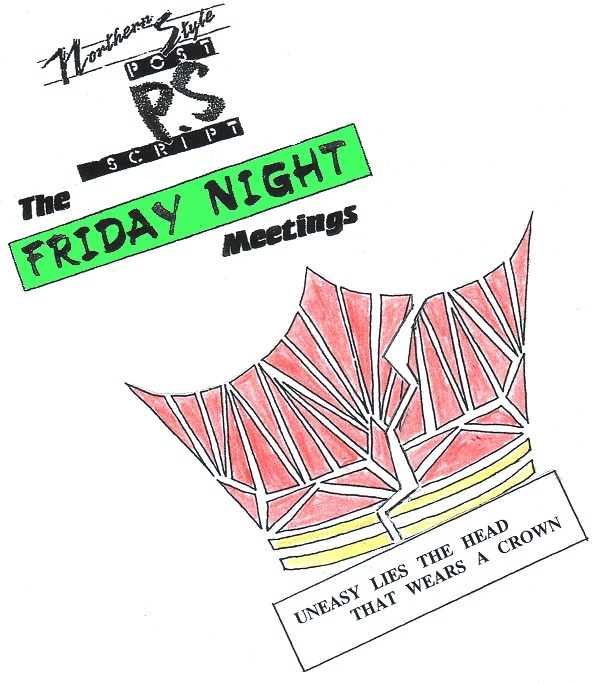 `Uneasy lies the head that wears the crown'
The title for our study is not a Scriptural one but comes from the Bard of England, who put these words into the mouth of Henry 4th, for he, having taken the kingship from Richard 2nd now wished that he had not done so as he faced rebellion in his newly-taken realm. Clearly, then, these Reflections are centered on a nation whose rulers have to keep in mind the constant threat of protest, rebellion or riots from a people who feel that the way of the life of their community is under threat. For the `western' nations, governed as they are by a system of Social Liberal Democracy, this unease is dealt with by democratic national elections, but nonetheless history records a continual stream of riots and protests from the governed people against perceived injustice, and they have become a general feature amongst settled communities world-wide. We do not have to be historians to understand this for the mighty web can make us all into instant historians - a visit to Wikipedia will give us all the information we need! However we are limiting these Reflections to the British Isles, and need go back no further than the 14th century.
As we have noted before, sections of the National Educational Curriculum are often used as a particular tool for Social Engineering, particularly in the subjects of History and Social Studies. But we are sure that even allowing for this, `English History' such as may be taught in schools will include social unrest which has culminated in riots. The 14th century saw the Peasant's Revolt, led by Wat Tyler, which was caused by the government of the day imposing limits on the wages paid to farm labourers, together with the ongoing frustration of serfdom in which people were called to work part of the time for no wages for their rich and powerful landlords. The tipping point came with the introduction of a Poll Tax with which to pay for the war with France. The Peasant's Revolt led to two great armies of working class people marching on London to demand justice, but they were met with brutal repression and the hanging or beheading of their leaders and many of the peasant themsleves.
For a variety of social reasons riots were recorded throughout the following 15th and 16th centuries, but to limit the number here we need only to mention a few of the more prominent ones - such as the London Gin riots and the London Spitalfields riots of the 18th century. These were followed in the 19th century by the well-known Luddite riots, when people were fearful that their established way of life was threatened by the introduction of modern machinery. Moving into the 20th century some may well recall the Nottinghill Race riots in London, and that is without the Northern Ireland riots which became an unfortunate way of life in those troubled years. In 1979 London again was the scene of the Southhall riots, and many will recall the Mosside, Toxteth, Chapeltown and Handsworth riots of 1981. The Poll Tax riots in the 1990s will certainly be remembered, and possibly some will recall the Brixton and Leeds High Park riots of 1995. To bring our memories up to date, 2001 saw the Bradford and Oldham riots, and as late as 2010 riots in Northern Ireland caused damage worth millions of pounds with 80 policmen injured (and today in 2013 riots are breaking out here again). The Student riots in 2011 left 14 policmen injured and over one hundred people injured and five dead, with political offices and a college damaged and royalty unintentionally caught up in the troubles.
All these riots - and the many we have not recorded here - were the result of real or perceived threats to people's way of life in their settled communities in whatever form they had developed over many years. An incident, one of many, caused an outbreak of protest which led in turn to a full-scale riot, with the consequential damage going beyond the area of the community concerned. This created fear and anxiety in the wider communities which was fuelled by the `media of the day', and in all cases the result was violent reprisal by the authority where `crowns lay uneasy upon their heads'. Clearly such unrest leading to rioting is a re-occurring phenomenon in communities all over the world, but we limit our Reflections to Great Britain and need not go back beyond the 19th-20th centuries for a background to this country's riots.
It has been said that politically the `genius' of Western Europe lay in the geo-political network of Nation States (in its many and varied forms). All landlocked into the western peninsular of Europe, these various States have always been fearful of their neighbours, always watching the enemy without and the enemy within their territorial borders. In such a fear-filled scenario acceptable Patriotism can easily lead to assertive Nationalism - which in its extreme form becomes an uncontrollable and aggresive form of Patriotism leading to national wars. Many say this has been the curse of Western Europe, but others that it is its `genius', for wars produce numerous innovations in the field of military prowess and a harnessing of the economic power of the country joined to the will of the people to resist the perceived enemy. This produces wealth for the whole Nation State - employment for the people, developed infrastructure in the country and taxes pouring into the `king's Treasury'. In the case of maritime powers this has meant the building of National Fleets, which then extend the national interests to other continents, with the resultant Empires which rise and fall.
Such nationalist ambitions raise up powerful leaders in the Governing and Mercantile classes, stirring the hearts and minds of a naturally sluggish poplace which would prefer to be left in peace and quiet - until they are threatened by events without and within the nation. Over the centuries political thinkers from Adam Smith to Hayek (the originator of one of the mainstreams of today's economic theory) have long pondered over the question of how such nations have emerged. Collectively they called it `guidance by an Invisible Hand' -the collective will of a gathered people who resolve disputes by Laws made by themselves, all residing within a recognisable territory with defined borders, and in so doing the individuals become the collective whole of a nation. Thus came the expression, `the Law of the Land' - a people joined to a land defined and upheld by Law. As we have said, such people, faced with a real or perceived threat, can easily turn from Patriotism to Nationalism where they are then used by Nationalist `demi-gods' to wage war on their neighbours - for the purpose of a king is to rule and to extend his kingdom.
Such a political governing system is the antithesis of a tribal or family system of governing where membership is determined by genetics. The people of a Nation State are `strangers', very loosely they could be called neighbours living together in a common territory defended and protected by the State and the Law of the Land - people who share a history and a common culture and religion, and a land which people can call `home'. Through the emergence of a Constitutional Monarchy the former despotic rule of kings has now developed into the present British Nation State with the Monarch standing as the embodiment of a subject people. The notion of belonging to a nation composed of `stangers' but with a common cause has been used continually by ambitious men who by their stirring rhetoric led nations into glory. It has been equally used by the State to rally the population to `the flag' in order to resist such ambitions coming from outside the nation's borders - Patriotism and Nationalism, the glory and the curse of Western European Nations over many long centuries! However, as we have said, we wish to limit these Reflections to `Perfidious Albion' - which title these Islands are also called by for interfering in Europe's affairs, yet never wanting to be completely part of it. A nation `set apart' could well be said of the British Isles!
As we have noted on many occasions, words often have a deeper meaning which through casual usage is often overlooked - and that extends to the title `Nation State', more often used as an interchangeable title of `Nation' or `State'. In fact, however, these Isles are constituted as a Monarchy, albeit a Constitutional Monarchy with its power devolved to directly elected members (of the Monarch's) Parliament, the House of Commons, and its Second Chamber, the House of (the Monarch's) Lords. These two `Houses' together with the Established Church of England form the twin pillars of the Great British Nation State. As such, the people belonging to this nation are subjects, not citizens. (To use a play on words, its people could be called `constitutional subjects', but we need not expand that thought.) Over the past 60 years, in fact since the demise of the British Empire, it has been said that this country `has lost an Empire and has not yet found a cause'. With the understanding that State education is largely a `Social Engineering Project', national history has all but been phased out of the National Educational Curriculum and has been replaced, substituted, by a trans-national European concept. This can be seen with the young population of the country today having little or no knowledge of national history, and therefore having very little concept of the responsibilties called for by a collective people gathered into a Land governed by Law.
We find political leaders and the media increasingly talking of `citizens' rather than subjects of a Constitutional Monarchy, which is alien to the consciousness of the mainstream British people. Citizenship speaks of Republicanism, which is a Roman system of rule and, in its earlier form, a Greek concept. It speaks therefore of independent Communities or City States called into a Union of States. This requires a strong leader enforcing the Republican Constitution, by force if necessary should any individual State endanger the Republican system, and this was clearly seen in the American Civil War. It can still be seen today in such nations as France, which is composed of many Provinces (quasi States) where Mayors have more than a ceremonial role, and this has led to a continual reforming of the Republic in order to accomodate the pressures from the Provinces. Italy, Spain and Germany all have their own quasi States or Provinces in order to accomodate their own political State systems. This is not so in the British State system where there is, at present, a Unified Nation State ruled over by a Constitutional Monarch whose power is devolved from and vested in the directly elected Members of the House of Commons and the hereditary or appointed Lords.
It could be said that so far these Reflections have become a political discourse, and we ask for your patience as we lead into our purpose in looking into the cause of the 2011 London riots. But before that we have to make one more skirmish into political institutionalism.
Settled communities or nations do of course fade from recorded history for many reasons, with wars, plagues or imperial conquest being the main reasons, but even those drawn into `Empires' very often re-emerge with the demise of Imperial dreams. And so briefly, and finally, we turn our thoughts to the second British Empire, which rose to its greatest height of Imperial power during the reign of Queen Victoria with India as its `Jewel in the Crown', and it has been recorded that the rulership of this British Empire was unique in its form of rule. The Roman Empire legally transferred citizenship upon all its conquered peoples and was therefore one composite whole, although this was often outworked through the savage and brutal subjugation of its `citizens'. The various Islamic Empires sought to bring by the sword all its subjugated people into the Islamic Umma, whilst the various `mini' Empires of the Western Nations during the 19th and 20th centuries were more concerned with the rape and pillage of countries rather than the rule of law and justice.
The `genius' of the British Imperial rule was that it allowed, even encouraged, multicultural autonomous rule under local dignitaries, all of whom were subject to the benevolent rule of the Queen Empress and her Viceroys and Governor Generals. This allowed the latter-day `Merchant Adventurers' to form large trading companies, who often became quasi viceroys of the Empire - seen in such men as Cecil Rhodes of South Africa and Raffles of Singapore and Malaya. Such rule allowed trade to flow peacefully into the economic heart of the British Empire, which rose to the height of world power and economic wealth during that time. For as long the semi-autonomous dignataries ruled wisely and justly Imperial rule was a peaceful way of life for all and the status quo was maintained. But eventually corruption worked its way into the system, with Provincial rulers, Maharajahs and Nawabs oppressing and over-taxing their people, and so riots broke out. These were suppressed by Imperial forces and then everything was placed back under the same semi-autonomous rulers - or if they were found to be unacceptable they were replaced by others of a similar kind.
That Imperial ethos can be seen developing today in modern multicultural Britain, with autonomous communities within this country being `ruled' by local dignitaries, all subject to the governing `viceregal power' of the day, the State. This can be seen in all the major cities of the United Kingdom . . Islamic, who demand Sharia Law . . Hindu, with local Elders deciding the future of their communities . . Asian, with often their own form of self-rule. Certainly we are aware that some of the large Midland cities have been divided into several distinctive national communities, each one with their own economic power being controlled by gambling, prostitution or drugs, ruled by over-lords with armed `protectors' to ensure their authority is maintained. It is common knowledge that this quasi imperial rule dominates much of London through the multicultural communities being ruled by powerful gang leaders. This modern form of Imperial rule is being forced upon peaceful communities, such as the Jewish community which for many decades has been subject to Rabbinical Courts, and latterly by the Christian community, which for centuries has been split by denominational systems but is now being brought into a more coherent community with titles such as `Churches Together'.
This background leads us directly into the main subject of these Reflections - the 2011 London riots (which spilled over into many other cities in this country). A growing resentment against poverty and the emptiness of life in the London communities led to the riots, triggered off by the shooting of someone from a community by the ruling authority. As with the earlier Imperial rule, these riots were ruthlessly put down with excessive force and there were demands for retributive justice to be meted out. Once this was dealt with each community was again left to its own rule, with the understanding that any further riots would lead to a very strong hand being exercised for there is no longer an overriding patriotism binding this country into a coherent whole nation, as set out earlier in these Reflections. All settled communities that have a developed political system of government are conservative by natural instinct, a natural consciousness with a common longing, trusting in and relying upon the governing authorities to maintain the institutions of Justice and Law undergirded by a national religion.
The twin pillars of a Nation State are Government and a Common Religion so that all people may live a life of quietness and dignity in order to care and provide for their families. Increasingly we are seeing Christian Ministries becoming more vocal as they begin to understand that the major culture into which they have assimilated over the centuries has given way to a multicultural quasi Imperial State, of which they are but one of many under the same rule. These Ministries, as would be expected, have entered into strong political lobbying, conducting Protest Meetings under the banners of such groups as `Concern for the Nation' or `Battle for the Land', and many others with varied titles, seeking to bring back a `wayward nation' into its Judaeo-Christian inheritance. However we have said on many occasions that such earnest Ministries lack understanding of what has unfolded in this nation, for its religious inheritance should more correctly be called a Judaeo-Greek inheritance.
The established State religion of Great Britain is the Church of England, which has never officially announced itself to be a Protestant Church and therefore has never cut its spiritual `umbilical cord' with Rome, maintaining that its `position' in the nation's life sanctifies the nation. This is a Judaic concept - for as long as the priests continued their round of sacrifices and rituals in the Temple the people in the Land were `sanctified'. The State, however, is centered on Greek ideology and the nation's secular government is the democratic ruling of the people with authority vested in an elected leader. In its earlier `life' it was the rule by the elite of a Greek City State over the `demos'. In fact the word `democracy' was used as a derogatory term by the elite, saying in actual fact `this is mob rule'. This elite in the nation - which is now under a Constitutional Monarchy - has developed into a Government with its Prime Minister, which has become a quasi form of imperial rule over a multitude of communities in this land. It is this understanding which forms our opinion that Great Britain's cultural inheritance, both secular and sacred, is Judaeo/Greek and not Judaeo/Christian.
We now need to bring in the economic life of the Nation, which has changed over the centuries from a land-based economy, ruled over by aristocratic families, to an industrial-based economy, ruled over by a new type of aristocracy, and on into a manufacturing economy, which produced powerful magnates who soon found their way into the House of Lords. The service-industry based economy soon joined with this and became the `Consumers' economy, with new `Retail Lords' regularly springing up in the Honours Lists. Which brings us to where we are today - a Consumer society - which has squandered its inheritance, for the very expression gives us understanding that there is no thought for the past and no responsibility for the future. Society must, and is, urged to consume in order for growth to be produced in the economy - surely a complete contradiction in terms!
A Nation starts with a people gathered into a recognisable land who then form and live their lives through established laws. The new generation has respect for the nation's past and the people who produced what is now entrusted to them, having a responsibility towards those who follow on. It is best seen in its primitive (that is, common) form in the family, where two people, a man and woman, enter into a marriage covenant relationship, aware of where they have come from and prepared to work and provide a safe home for the children they bring forth, joining with others to form settled communities which grow to form a nation. It is this National Inheritance that has been squandered, and in its place has come the Consumer Society with its core belief of self-satisfaction which has no respect for the past and no responsibility for the future. Such a society must, by its own nature, fail and is now being replaced by multicultural communities ruled over by their own leaders under the watchful eye of the modern `viceroys of Imperial power' in the land!
Have we seen the warning that has been quietly emerging in the multicultural development in this country, which if it continues will find the Christian community becoming merely one of many communities governed by a benign new `Imperial rule'? There will be scant regard for Christians seeking to return to the status quo ante, but there will be strong encouragement for a Christian community which will take its place within the system of `quasi State rulers', as seen in the British Imperial rule. Such communities will be allowed to impose self-regulation over their people, always with the knowledge that an `iron fist of Imperial power' will be ready to intervene if self-regulation fails! It is for the reader to discern if these Reflections are alarmist sensationalism or a warning of what has quietly happened and which will increasingly develop. These Reflections are primarily concerned with Christians and their Assemblies, but of course they cannot be seen in isolation. Certainly such areas or local Christian communities are being formed, and we have cited one such grouping under the banner of `Churches Together' - and there are many more under different banners. Such groupings are of course Scriptural and formed with the very best of intentions, but this country's multicultural development poses a real threat to the Christian ethos of a distinct and unique people called to witness to the One True God who alone saves in the Person of Jesus Christ.
How, then, can a modern `Imperial State Power' bring the Christian community into its multicultural society? Over recent years we have seen all Christian Charitable Trusts having to examine, and if necessary re-write, their Constitutions in order to comply with the Charity Commission's social ideology. Churches' use of State buildings is under constant scrutiny to ensure there is no conflict with State social policy, and increasingly we hear of secular organisations refusing to hire out their buildings to Christian groups in case they are prosecuted for indirect association with what is said in such meetings. The regulations for all who work with children further strengthens the grip of the State, which can, if it so wishes, restrict what can be taught to such children whether it be in Sunday Schools or Youth Clubs. Clearly the sex `education' being introduced at all levels in schools shows that children `belong' to the State and are merely entrusted to the parents for as long as they comply. Street Preachers, from time immemorial a feature of this country's streets, are harassed and prosecuted; Church registration has long been mooted and is within the concept of the multicultural society - highly desirable if there is to be `self-regulation' of dissenters! There is little point in listing more sightings of what is to come, and surely there is now the need of a Scriptural `Selah' . . . pause and consider.
There may well be a `Battle for the Land' or `Concern for the Nation' - and indeed there is an `Invisible Hand' forming and shaping the affairs of this land - but a greater concern for true Christians must be to see just how deeply the True Church has assimliated into the Consumer Economy and squandered its inheritance, not seeking a return to the status quo ante of the nation's cultural life in which it has hidden itself over the centuries. The True Church is called to be the Family of God in a Community of the nation in order to proclaim the Good News of the Gospel of God through acceptance of His Son Jesus. The staus quo will merely restore a fractured broken Family, papered over with slogans such as `Churches Together', but the people of this nation need an answer to their distress. It must start with a Family, who through its respect for the past and with its responsibility for the future can call many into the Kingdom of God. Such a Family, as we are called to be, will be the means through which the `Invisible Hand' of God will produce a foreshadowing of that Kingdom which will prevail for all eternity!
~ ~ ~ ~ ~ ~ ~ ~
|
You may E-mail us at: derek@northernstyletrust.com or Telephone (01493) 444494 (UK)
Our Web Address: www.northernstyletrust.com
|


